

TUCKERTON, N.J. (Oct. 2, 2026) – The Northeast Regional Urgent Care Association (NERUCA) is announcing that members of its Public Health Committee are co-authors of a report in the Centers for Disease Control and Prevention's Morbidity and Mortality Weekly Report (MMWR). The report, published Oct. 1, 2026, examines how well health care facilities in the region can identify, isolate, and manage a patient with a suspected high-consequence infectious disease.
The article, “Unannounced Drills Using Patient Actors to Evaluate Health Care Facility Readiness for Infectious Disease Outbreaks — New Jersey, New York, and U.S. Virgin Islands, January–June 2026,” appears in volume 75, issue 38. It was produced in collaboration with the New York City Department of Health and Mental Hygiene, NYC Health + Hospitals/Bellevue, and the NYU Grossman School of Medicine. NERUCA Public Health Committee Chair John Kulin, DO, and Samantha Burke, NERUCA's Director of Public Health & Education, are among the authors.
How the drills worked
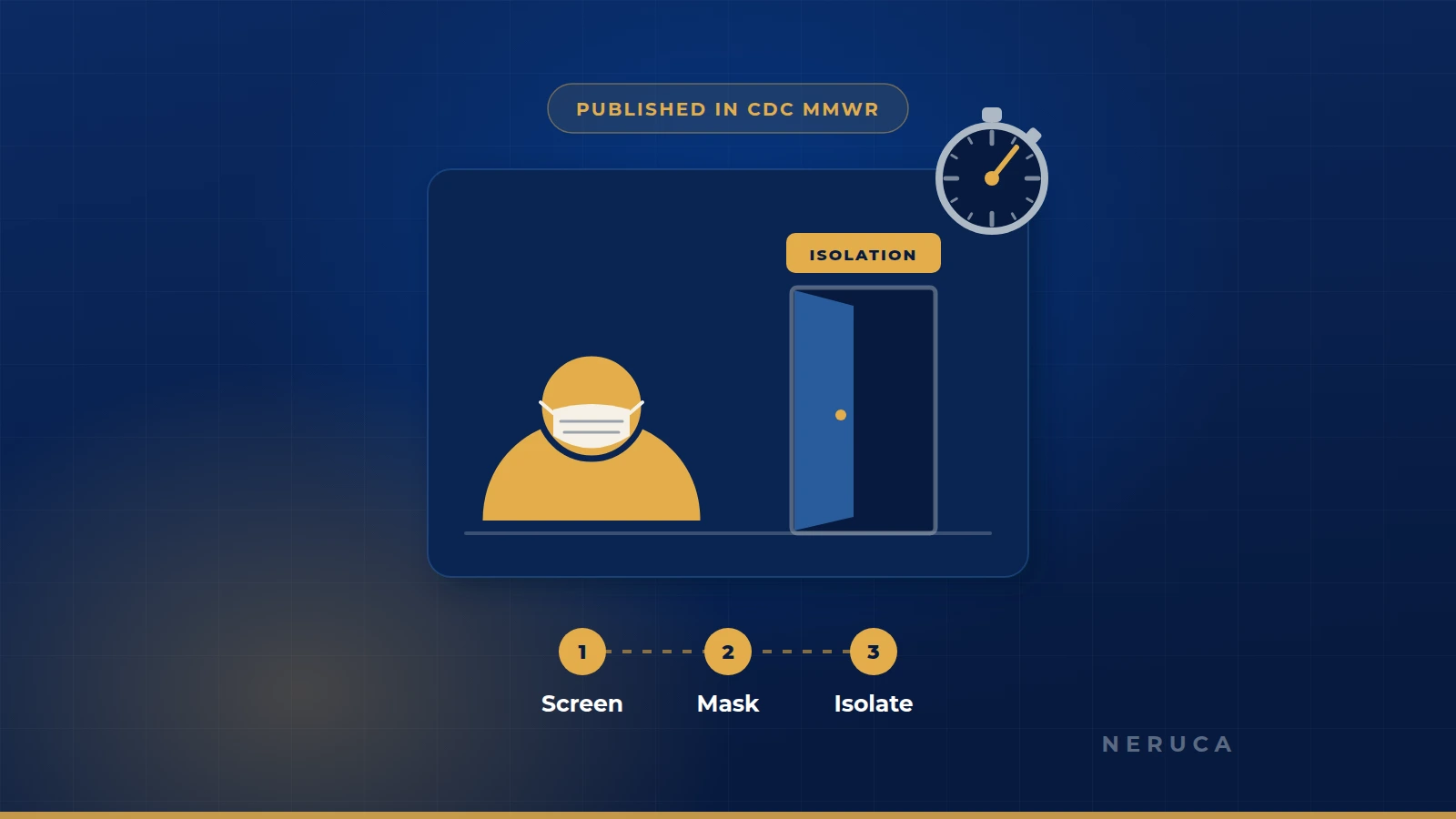
From January through June 2026, professional patient actors from NYU's Standardized Patient Program visited emergency departments, hospital outpatient clinics, and urgent care centers without advance notice. Each actor presented with symptoms consistent with avian influenza A(H5), including conjunctivitis, fever, cough, and a history of contact with a sick bird. Staff were evaluated on how quickly they screened, masked, and isolated the patient, whether they used personal protective equipment (PPE), and whether they notified infection prevention teams. NERUCA helped recruit the urgent care centers in New York City.
In all, 73 drills were completed across 69 facilities in New York, New Jersey, and the U.S. Virgin Islands. Twelve took place in urgent care centers.
What the report found
Overall, patients were both masked and isolated in 60% of drills. The median time from arrival to masking was 2 minutes, against a target of 1 minute. The median time to isolation was 11 minutes, against a target of 10. Symptom screening happened in 93% of drills. Questions about exposure to birds or other animals, which are specific to avian influenza, were asked at triage in fewer than 10%. Clinicians wore all recommended PPE in 25% of drills.
Urgent care centers placed the patient in an isolation room in all 12 drills, the highest rate of any setting. Masking took longest in urgent care, with a median of 5 minutes. The authors note that most patients meet security, reception, or registration staff first, and recommend role-specific infection prevention training for both clinical and front-desk staff.
The authors write that the drills show the format works in outpatient settings beyond emergency departments, where patients with acute infections increasingly seek care. They also point to an updated drill toolkit from the NYC Health Department that facilities can use to run their own exercises.
Urgent care centers are a front door for patients with acute respiratory and febrile illness. NERUCA's participation in a CDC publication reflects the association's work on preparedness, education, and public health partnerships across the region.